All Categories
Featured
Table of Contents
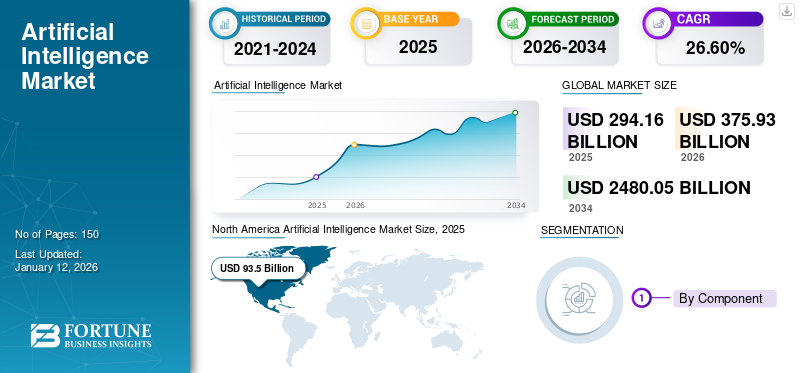
A post by Alexander Rugaev, the Creator of AR Ventures. Expert system has rapidly become the main location for global endeavor capital. Aggregated data from PitchBook, CB Insights, and other market trackers shows that AI business raised approximately $270 billion in 2025, representing over half of worldwide equity capital investment that year.
Comparing Leading Automation Solutions for 2026Much of the global conversation around AI investment focuses on generative models and the enormous computing facilities needed to train them. Energy accessibility, regulatory frameworks, and access to long-term capital increasingly form the location of AI development.
The area combines reasonably low energy expenses, collaborated state-backed investment cars, and a start-up ecosystem that stays less saturated than major Western markets. Together, these factors are beginning to form a various investment thesis for AI in the area. The fast growth of AI workloads is already creating infrastructure difficulties worldwide.
While capital and hardware availability remain essential, energy supply and grid capability are emerging as crucial constraints in lots of markets. In parts of the United States and Europe, rising energy prices, grid restrictions, and regulatory approval timelines are starting to affect how rapidly hyperscale information centres can be deployed. The Gulf region operates under different structural conditions.
Top Cloud Computing Shifts in Regional Markets
Qatar, for instance, has been actively drawing in hyperscale infrastructure financial investment, while Saudi Arabia has actually taken a more expansive technique. The kingdom's Humain effort, backed by the Public Investment Fund and partnered with companies consisting of Nvidia, AMD, AWS, Qualcomm, and Cisco, targets 1.9 gigawatts of information center capability by 2030, with longer-term aspirations of reaching 6 gigawatts by 2034.
However, infrastructure financial investment in AI is not simply a question of capacity. Modern AI accelerators can draw close to one kilowatt of power at peak load, indicating that the long-lasting economics of information centres depend greatly on sustained workloads and energy effectiveness. For financiers, this places increasing importance on cooling technologies, energy optimisation, and the utilisation economics of inference work rather than just headline capacity figures.

This is where the GCC might hold an advantage that is frequently overlooked in worldwide AI conversations., for example, prioritises the adoption of AI throughout multiple federal government departments and sectors.
Solutions developed for these environments require specialised understanding of regional regulative and financial systems that worldwide startups might discover difficult to duplicate rapidly. AI tools that transform clinicians' voice recordings into Arabic-language medical documents, or systems designed to automate regulative compliance for GCC-specific structures, resolve extremely practical functional issues.
From an investment viewpoint, start-ups operating in these specialised sectors often face less competitors than comparable companies in the United States or Europe. Much of the technologies developed for Arabic-language environments or region-specific regulatory systems might also find demand in underserved markets across Africa and parts of Central Asia, where similar linguistic and regulatory conditions exist.
How to Integrate AI for Greater Tech Results
Initially, facilities financial investments should be examined not only by revealed information centre capacity but likewise by energy effectiveness, utilisation rates, and long-lasting work sustainability. Second, a few of the most durable AI services may emerge from companies embedded in operational workflows rather than consumer-facing applications. Enterprise software application that silently automates compliance, documentation, logistics optimisation, or financial analysis typically produces stable, recurring profits since organisations depend on it for day-to-day operations.
As language models, speech recognition systems, and enterprise AI tools end up being more tailored to Arabic-speaking markets, the business developing these abilities could ultimately serve a much wider location where similar linguistic barriers exist. As local information centre facilities broadens and business adoption of AI moves from pilot tasks to massive procurement, the Gulf's position in the worldwide AI community may begin to develop.
The structural conditions that allow this shift are already emerging: access to energy resources, collaborated capital deployment through sovereign funds, and a regulative environment where federal governments are actively motivating AI adoption. The question for financiers is less whether these conditions exist and more how quickly capital and creators transfer to build within them before the chance becomes extensively identified.
How to Leverage AI for Maximum Digital Results
A short article by Alexander Rugaev, the Founder of AR Ventures. Synthetic intelligence has quickly end up being the main location for global venture capital. Aggregated data from PitchBook, CB Insights, and other industry trackers shows that AI business raised approximately $270 billion in 2025, representing over half of global venture capital investment that year.

Latest Posts
The Future of Technological Innovation for Startups
New Venture Updates From GCC Startup Sector
Strategic Benefits of Cloud Integration in the GCC