All Categories
Featured
Table of Contents
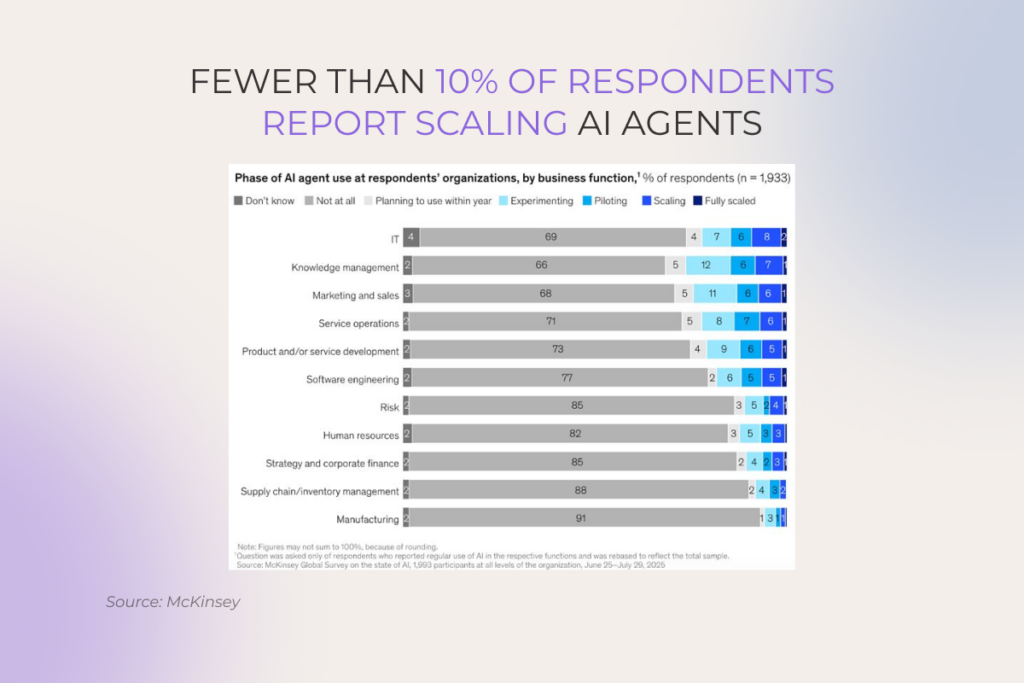
This column series takes a look at the greatest information and analytics difficulties facing contemporary companies and dives deep into successful use cases that can help other companies accelerate their AI development. Carolyn Geason-Beissel/MIT SMR Getty Images MIT SMR writers Thomas H. Davenport and Randy Bean see 5 AI patterns to take note of in 2026: deflation of the AI bubble and subsequent hits to the economy; development of the "factory" facilities for all-in AI adapters; higher concentrate on generative AI as an organizational resource rather than a specific one; continued progression towards worth from agentic AI, regardless of the hype; and ongoing questions around who ought to handle information and AI.
This means that forecasting business adoption of AI is a bit easier than anticipating innovation modification in this, our third year of making AI forecasts. Neither people is a computer system or cognitive researcher, so we usually remain away from prognostication about AI technology or the particular ways it will rot our brains (though we do expect that to be a continuous phenomenon!).
Saudi Vision 2030: Scaling Tech Infrastructure with Machine LearningWe're also neither financial experts nor financial investment experts, but that won't stop us from making our first prediction. Here are the emerging 2026 AI trends that leaders must understand and be prepared to act upon. In 2015, the elephant in the AI space was the increase of agentic AI (and it's still clomping around; see below).
It's hard not to see the resemblances to today's situation, including the sky-high assessments of start-ups, the focus on user growth (keep in mind "eyeballs"?) over earnings, the media buzz, the expensive infrastructure buildout, etcetera, etcetera. The AI industry and the world at big would probably gain from a little, sluggish leak in the bubble.
Establishing a Digital Hub in the GCC
It won't take much for it to take place: a bad quarter for an important vendor, a Chinese AI model that's much more affordable and just as effective as U.S. models (as we saw with the very first DeepSeek "crash" in January 2025), or a couple of AI spending pullbacks by big business clients.
This column series takes a look at the greatest information and analytics obstacles dealing with modern business and dives deep into successful use cases that can help other companies accelerate their AI progress. Thomas H. Davenport (@tdav) is the President's Distinguished Teacher of Infotech and Management and professors director of the Metropoulos Institute for Innovation and Entrepreneurship at Babson College, and a fellow of the MIT Effort on the Digital Economy.
Randy Bean (@randybeannvp) has been an adviser to Fortune 1000 organizations on information and AI management for over four decades. He is the author of Fail Fast, Discover Faster: Lessons in Data-Driven Leadership in an Age of Disturbance, Big Data, and AI (Wiley, 2021).
Quantum computing has long seemed like sci-fi. But researchers are going into a "years, not decades" age where quantum machines will start dealing with issues classical computer systems can't, states Jason Zander, executive vice president of Microsoft Discovery and Quantum. That looming development, called quantum benefit, could assist resolve society's most difficult difficulties, Zander states.
AI discovers patterns in information. And quantum adds a new layer that will drive far greater precision for modeling molecules and products, he says.
Building AI Roadmaps for Modern Enterprises
It's the first quantum chip constructed using topological qubits, a style that inherently makes vulnerable qubits more stable and reliable. It's also the only quantum solution engineered to capture and right errors. That architecture leads the way for devices with countless qubits on a single chip, offering the processing power required for complex scientific and commercial issues.
"The future of AI and science will not just be faster, it will be fundamentally redefined." Lead image developed by Kathy Oneha/ We. Communications. Illustrations produced with Produce in Microsoft 365 Copilot. Story released on Dec. 8, 2025.
A year in tech can feel like a decade anywhere else. Think of it: a year earlier, we were going over how ChatGPT wasn't able to count the variety of "r"s in "strawberry." Reasoning models from Chinese frontier laboratories (like DeepSeek-R1) had not taken the world by storm, and neither had open-source reasoning agents.
IBM's Granite 3.0 had only simply gotten here. And the agent discussion was only beginning: MCP had actually simply acquired traction in the spring, with a significant recommendation from Sam Altman. On the other hand, worldwide of facilities, chips and compute resources were ending up being limited, giving new territories a competitive benefit. Over the last few weeks, IBM Think talked with a lots experts in techresearchers, creators and leaders from IBM and beyondto get their insights on what to expect in the year ahead.

Latest Posts
The Future of Technological Innovation for Startups
New Venture Updates From GCC Startup Sector
Strategic Benefits of Cloud Integration in the GCC