All Categories
Featured
Protecting information sovereignty has also become a strategic concern, considered that information is an important possession for national security, privacy, and the economy. As a result, countries are enacting laws and guidelines to restrict access to information and ensure that it stays under local control, therefore minimizing the threat of exploitation by foreign actors. In the middle of the US-imposed constraints, China views manage over innovative technologiesincluding cloud computingas a way to decrease reliance on foreign innovations, establish international impact, promote development, and strengthen
its digital economy. The Chinese federal government designated cloud computing as a tactical field in its 12th Five-Year Strategy(20112015 ), supporting the development of local infrastructure and encouraging the development of Chinese cloud companies. Today, Chinese business dominate the cloud market within China and are steadily broadening their worldwide
operations. China's growing presence in the cloud computing sector has actually raised concerns amongst states and organizations, particularly around information security, personal privacy breaches, unauthorized access to details, and the transfer of information to external partiesespecially the Chinese government. The American business NowSecure exposed significant security problems, consisting of unencrypted data transfers and insecure storage practices, with data being sent to servers in China managed by the Chinese firm ByteDance. The dangers associated with making use of Chinese cloud technologies likewise extend to wise cars, where data such as real-time location, driving patterns, users 'individual info, and the cars'technical conditions are gathered and saved. Another concern is that information gathered via Chinese cloud technologies might be made use of for purposes beyond its original intentsuch as user security or commercial and security espionage. The United States government has also expressed issue about the operations of Chinese cloud suppliers. In August 2020, as part of the Clean Network initiative, the Trump administration released a caution versus using Chinese cloud companies in an effort to safeguard the information of American residents and businesses from possible exposure to the Chinese federal government. The questions focused on how the business shops American clients'dataparticularly personal information and intellectual propertyand whether the Chinese federal government has access to that information. To date, the findings of the investigation have actually not been released. China is intensifying its local participation in the Middle East through international efforts, especially the Digital Silk Road(DSR)the technological component of China's Belt and Roadway Effort( BRI). The 3 leading cloud companies are Amazon Web Solutions( AWS), with a 32%market share, followed by Microsoft Azure at 22 %, and Google Cloud at 11 %. The Chinese company Alibaba Cloud ranks 4th with 4% of the worldwide market.
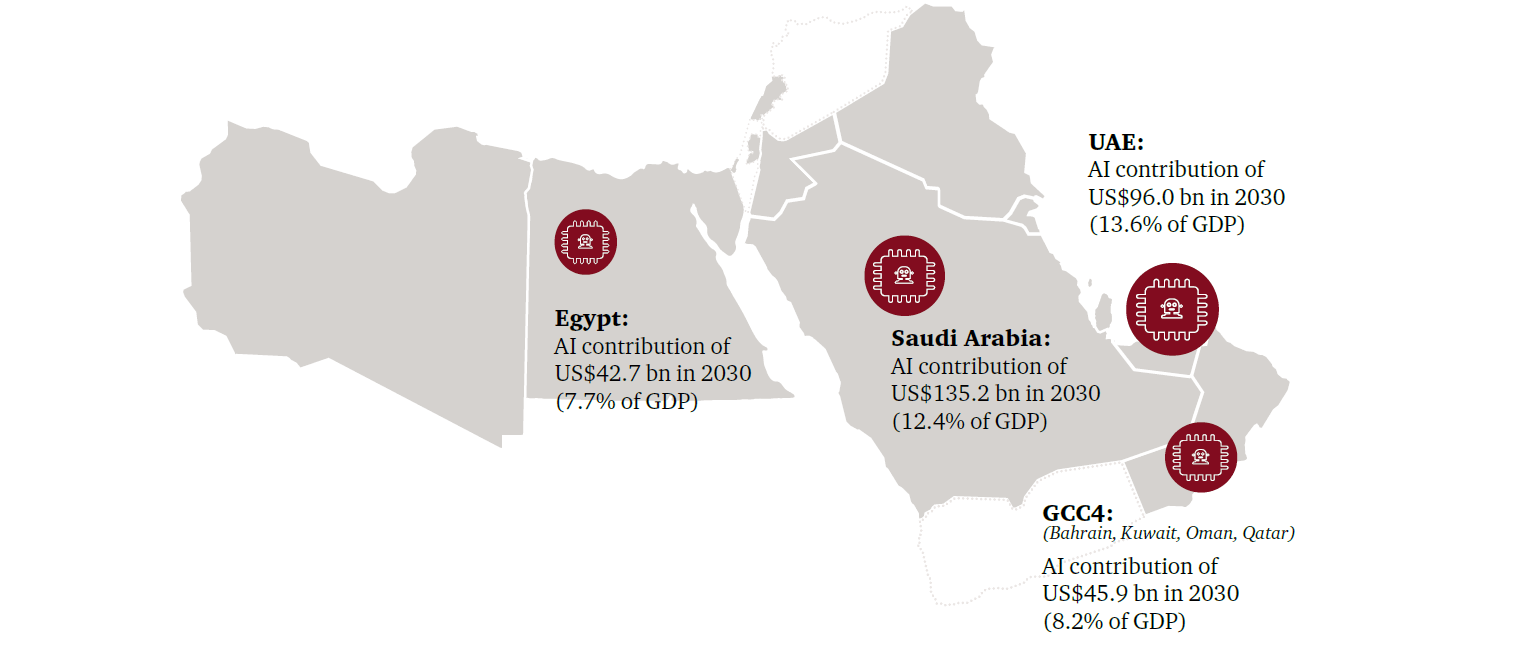
Top AI Computing Trends in Regional MarketsIn Saudi Arabia and the United Arab Emirates, both United States and Chinese cloud suppliers are active, but the United States keeps a more prominent existence, with 12 cloud regions in Saudi Arabia and 9 in the UAE. In comparison, in May 2024, Huawei Cloud released its first cloud region in Egypt and North Africa with a five-year financial investment of $300 million., Chinese cloud service providers have a limited presence, mainly catering to private business seeking economical prices or those working in Asian markets.

Initially, China's rise in the Middle East's cloud market, through investments in digital facilities and local collaborations, adds another layer of tension to the continuous competitors with the United States. This competition is not just limited to technological elements; it reflects a broader battle to form geopolitical spheres of impact, with the Middle East emerging as an essential strategic arena.
Evolution of Cloud Tools in the Middle East
Second, China's technological expansionespecially in Egypt, the United Arab Emirates, and Saudi Arabiademands tactical and diplomatic attention from Israel, as these are locations of direct geopolitical and security relevance for the country. Third, while there is awareness in Israel about information security and the threats of foreign technological impact, the threats related to Chinese cloud infrastructureeven in relatively neutral fields like clever vehiclesare not totally recognized.
These cars are equipped with smart systems that collect real-time datasuch as place, automobile movement, and system performance. This data is transferred via cloud infrastructure and may be stored on servers in China or managed by Chinese companies, raising concerns about the prospective use of such information for espionage, intelligence gathering, or perhaps remote control.
However, given the recurring reports and concerns about Chinese companies violating data personal privacy and security, making use of Chinese-made vehicles in Israelparticularly within government and defense institutionsshould be carefully examined. This includes assessing prospective national security dangers and thinking about much safer options for use in delicate environments. In light of the obstacles China provides in the technological and geopolitical arenas, it is vital that Israel thoroughly assess the long-term ramifications of China's growing role as a regional technological power.

Latest Posts
The Future of Technological Innovation for Startups
New Venture Updates From GCC Startup Sector
Strategic Benefits of Cloud Integration in the GCC