All Categories
Featured
Table of Contents
Information gotten and examined by "Arabi Post" on the map of cloud service centers and regions (information centers) in the Middle East and North Africa revealed that the region's nations rely heavily on American business for cloud services. The data shows the existence of around 31 American centers, most of them in Gulf countries, while the variety of centers owned by Chinese business reached about 7.
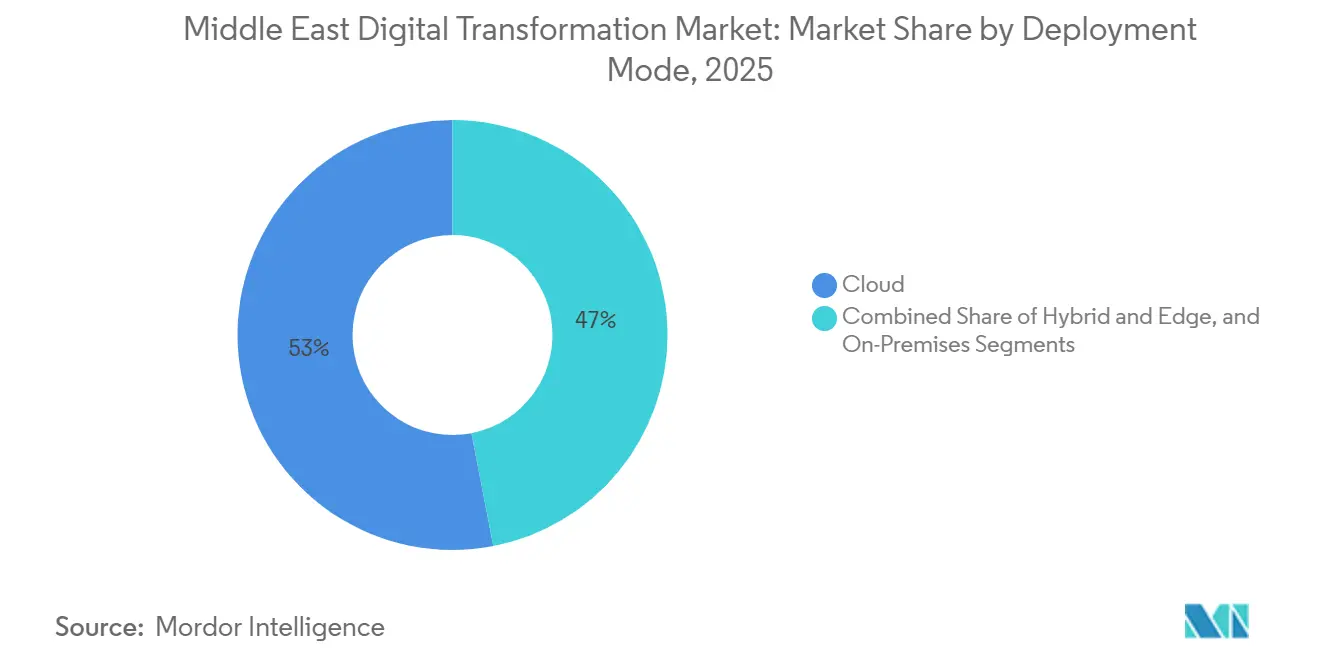
In the Gulf nations, more than 53% of the cloud facilities tracked there is American. Source: "Arabi Post" database of cloud service centers in the Middle East and North Africa (89 centers).
Within a few years, cloud service centers have shifted from a "technical option" for minimizing server expenses into crucial facilities for the state and the economy: e-government websites, payment and banking systems, health and education platforms, and the operation of huge data, synthetic intelligence, and more. But the recent Iran war (2026) exposed a new measurement: the cloud itself can be directly and physically targeted, as happened when Iranian drone strikes damaged Amazon AWS cloud service information centers in the UAE and Bahrain, causing interruptions and service interruptions.
Role of AI in 2026 Business Growth
The significance of American and foreign companies does not stop at technical competitors or service quality; it extends to digital sovereignty and concerns of control over data for these nations and their various sensitive sectors. American business are subject to U.S. laws regulating legal access to information, such as the CLOUD Act, raising concerns about the limits of judicial ask for information even when it is saved outside the United States.
"CLOUD Act" (March 2018): Section 2713 explicitly forces communications and computing company to protect and disclose customer information within their "possession, custody, or control, despite whether it is situated within or outside the United States" confirming the point above. (Click an image to see it complete size.) This dependence also converges with the context of cross-border intelligence event under structures such as FISA Area 702, as presented by U.S
Unlocking Superior ROI With Next-Gen AI SolutionsAt the very same time, experts contacted by "Arabi Post" warn of the risks of focusing contracts with American cloud provider, and of the effect of "foreign jurisdiction" on personal privacy and security. Between issues over sovereignty and the marketplace's need for ready-made facilities, the significance of data localization policies and the limitations of cross-border information streams is growing, as gone over in worldwide reports such as those by the OECD.
Why GCC Startups Thrive in the AI Sector
people or residents who communicate with people or organizations in those nations where information centers operated by American companies save the information of those nations and their residents. To comprehend the scope of this risk, it is required to first examine U.S. federal laws such as FISA Section 702 and the CLOUD Act, which governs U.S.
Although the CLOUD Act grants Washington broad authority to gain access to information kept in data centersthe large-scale facilities utilized by companies to shop and procedure informationin some cases, under the Act, U.S. authorities might be required to alert the government of the nation worried that there is a legal basis compelling access to that information.
The U.S. government might likewise punish or target any U.S. resident who participates in financial transactions with that country or sends money transfers to individuals there. Abu Al-Saad also states that if a dispute were to occur in between that nation and Washington, the United States could suspend its data storage services for that country and justify doing so.

This would impact all sectors, including financial and banking services. In the context of the security threats connected to nations' reliance on American data centers, another point likewise emergesone that Ibtihal Abu Al-Saad considers the most important and most harmful: the U.S. legal and intelligence tool called "National Security Letters" (NSLs).
Analysis of Top 2026 Automation Tools
federal intelligence and security companies. Under these letters, U.S. authorities have the capability to oblige significant innovation business to turn over delicate information connected to people or countries. Washington could, for example, force Amazon to open information records coming from users in Saudi Arabia, Qatar, Bahrain, or in other places, while "enforcing a stringent nondisclosure order that avoids the technology company from informing the Bahraini federal government or the targeted individuals that this gain access to has actually taken location.

Latest Posts
The Future of Technological Innovation for Startups
New Venture Updates From GCC Startup Sector
Strategic Benefits of Cloud Integration in the GCC