All Categories
Featured
I think we [will] all end up being AI authors, whether you're an online marketer, developer or PM." Many believe performance will be the new frontier. "GPUs will remain king, however ASIC-based accelerators, chiplet styles, analog reasoning and even quantum-assisted optimizers will develop," Kaoutar El Maghraoui, a Principal Research Scientist at IBM, stated throughout this week's Mix of Experts.
And open-source thinking designs and agents will keep pushing boundaries to dominate business AI. At the same time, trust and security will end up being key priorities as many business hone their concentrate on AI sovereignty. That's just the opening act for what's to come in enterprise tech in the days ahead.
AI is moving from experiments to systems. For much of the previous years, AI has lived in a familiar pattern: promising pilots, outstanding demonstrations, and isolated wins that hinted at change but hardly ever improved core systems. For much of the previous years, AI has actually lived in a familiar pattern: promising pilots, excellent demos, and isolated wins that hinted at transformation however hardly ever improved core systems.
The shift is subtle however consequential: AI is ending up being a core infrastructure, not an add-on. Together, these shifts define the leading AI patterns in 2026, marking a clear move from experimental tools to operationally embedded systems.
For innovation leaders, this minute feels different from previous AI hype cycles. Earlier phases concentrated on capability: could models generate text, acknowledge images, or predict outcomes? In 2026, the focus will move to integration: how AI systems communicate with existing platforms, how they scale reliably, how they are governed, and how they deliver quantifiable worth under real-world restraints.
Rather of acting as a reactive tool that waits for triggers, AI is increasingly designed to function as a partner, one that can analyze objectives, coordinate jobs, and run throughout systems with a degree of autonomy. This transition has architectural ramifications as much as organizational ones, demanding new techniques to software application design, information management, and system orchestration.
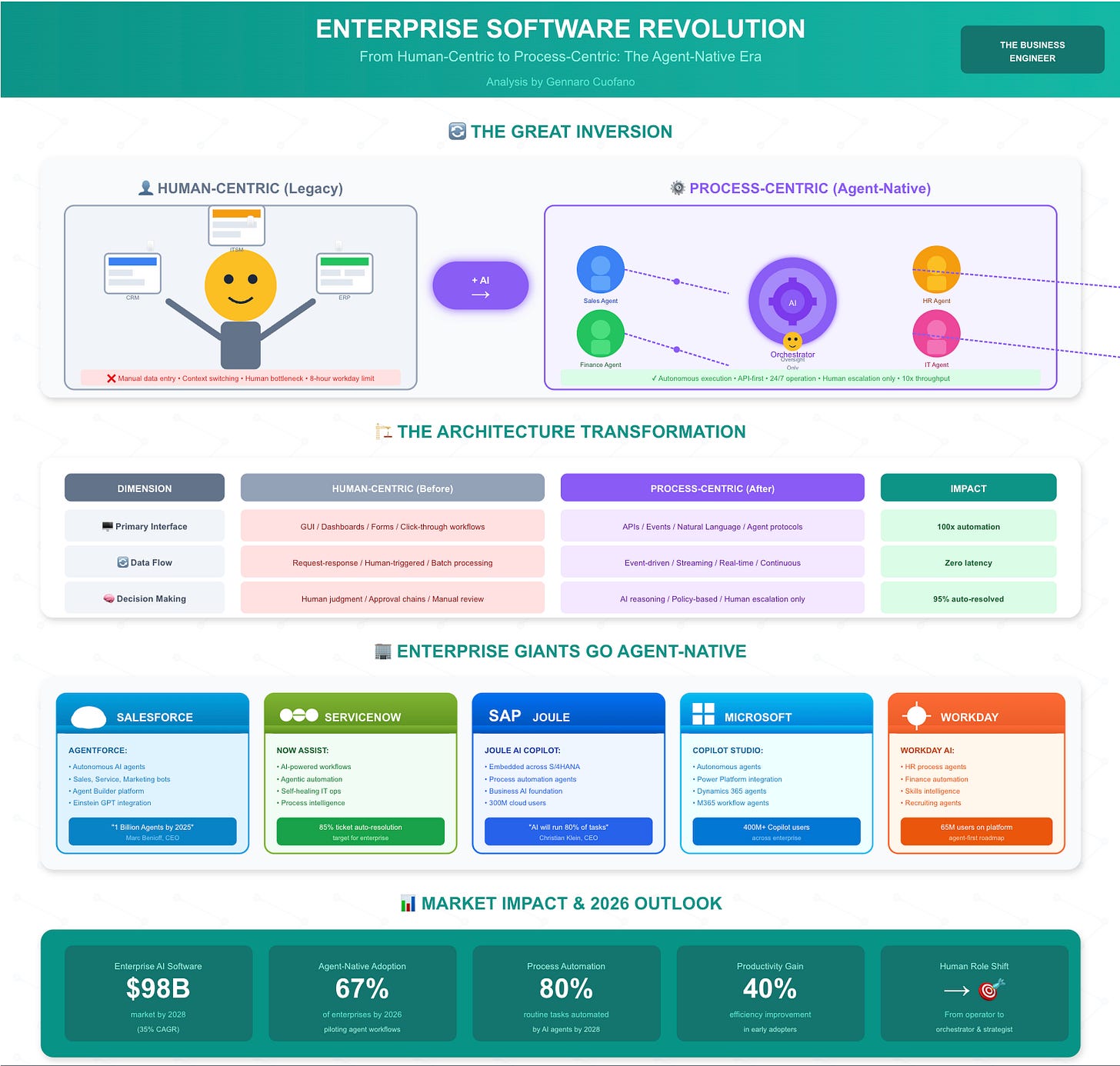
Understanding the top AI trends in 2026 needs looking beyond individual models and focusing on how AI is engineered into genuine systems. Listed below, let's look at what the top AI trends in 2026 are.
Ways AI Will Redefine Digital Strategies for 2026
But by 2026, that chapter may end. The next stage of AI is not conversational, it's agentic. Agentic AI describes systems designed around goals instead of prompts. Rather of waiting on directions, these systems can interpret intent, strategy sequences of actions, and adjust their behavior based on results. The shift is subtle in concept however heavy in execution: AI is no longer just reacting to users; it is starting to run within systems.
Are Middle Eastern Firms Ready for Applied AI?Where earlier AI combinations focused on enhancing specific functions: search, suggestions, content generation, hereditary systems cut across workflows. In practice, this suggests AI is coming closer to the function of an orchestrator than a function.
Are Middle Eastern Firms Ready for Applied AI?The emerging pattern in 2026 is multi-agent orchestration: systems made up of specialized representatives, each responsible for a discrete function, coordinated by a higher-level controller. This mirrors established software architecture principles, where distributed services changed monoliths to enhance strength and scalability. For technology leaders, the implication is clear: agentic AI is less about specific models and more about system style.
These are not purely AI obstacles; they are software application engineering challenges, magnified by autonomy. Numerous engineers explain the present phase of agentic AI as its "microservices moment." The analogy is instructional. Just as microservices presented flexibility at the cost of increased architectural complexity, agentic systems assure higher levels of automation while requiring stronger foundations.

Latest Posts
The Future of Technological Innovation for Startups
New Venture Updates From GCC Startup Sector
Strategic Benefits of Cloud Integration in the GCC