All Categories
Featured
Table of Contents
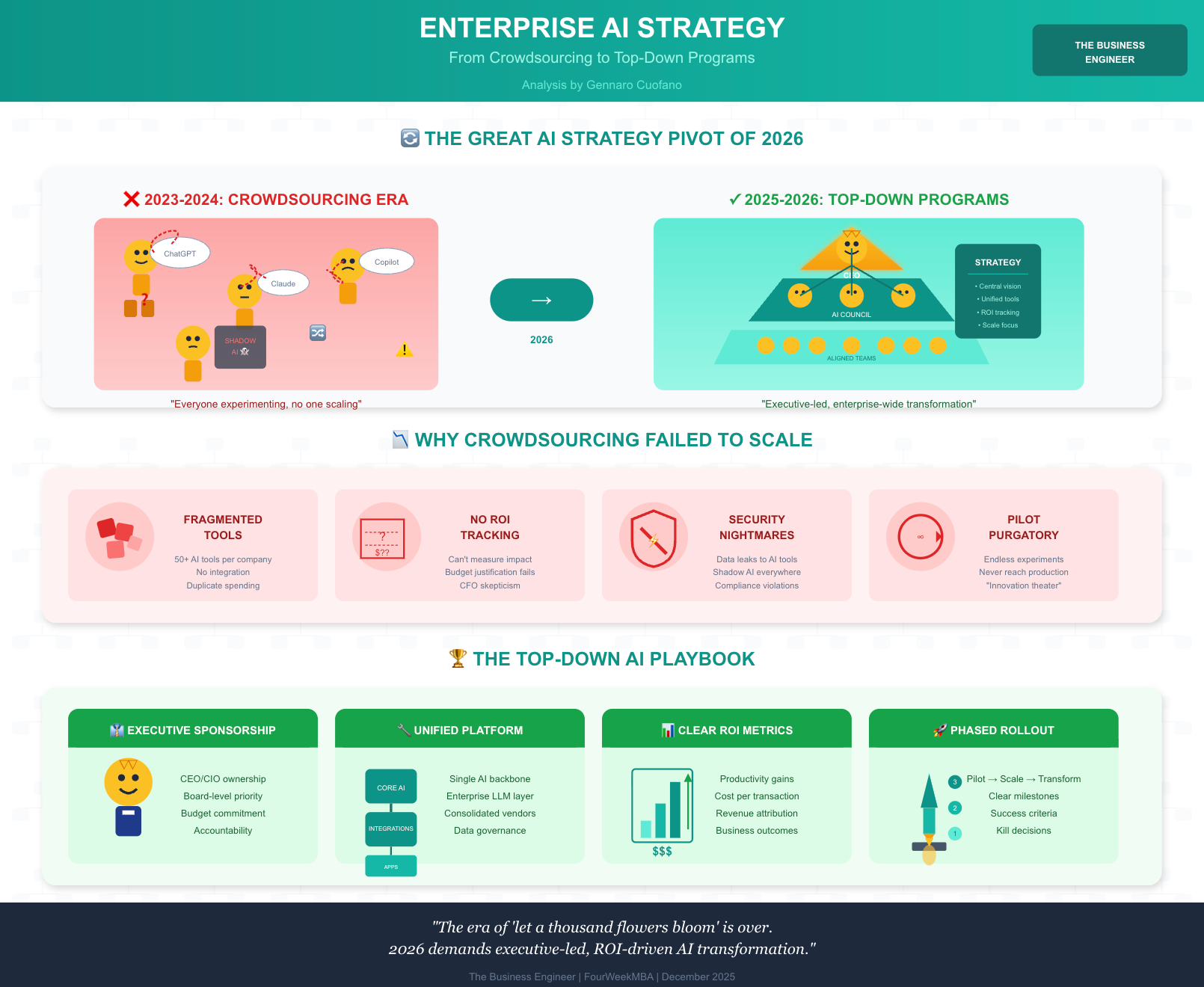
Traditional fintech and e-commerce platforms like Tabby are now retrofitting AI-native layers onto their existing architectures. This upgrade cycle develops evaluation advantages that intensify gradually. The differentiation in between "AI-native" and "AI-enabled" start-ups will end up being the primary filter for institutional financiers evaluating GCC chances in 2026. Fadi Ghandour's implicit critique of the region's start-up ecosystem brings analytical weight: the next unicorns need to be constructed on AI automation, not market arbitrage.
AI-adjacent facilities business brought in the largest rounds, while consumer-facing platforms without exclusive technology components saw extended fundraising timelines and lower assessments.-- Secondary deals will become important as venture funds technique later on stages and startup appraisals increase.
The covert reasoning is counterproductive: secondary markets alter the "exit-only" mindset that has actually controlled GCC startup culture. Founders can now offer partial stakes without activating an IPO, permitting them to preserve operational control while offering liquidity to early financiers and workers. This system produces a more fully grown capital ecosystem where business can stay private longer while still fulfilling early capital suppliers.
Role of AI in 2026 Market GrowthBoth jurisdictions require secondary liquidity infrastructure to draw in international family workplaces and institutional financiers who need flexible exit systems (Source 3: Market Structure Analysis). The advancement of devoted secondary trading platforms, or the integration of secondary capabilities into existing exchanges, will be a defining infrastructure story of 2026. For venture funds approaching their maturity horizons, secondary markets represent the distinction in between returning capital to minimal partners on schedule versus seeking extensions.
-- Worldwide AI laboratories are developing long-term operations in Abu Dhabi and Riyadh, drawn by 2 factors that the GCC possesses in abundance: capital and energy infrastructure. Large language model training needs both monetary resources and industrial-scale computing power, making the Gulf's sovereign wealth funds and energy properties distinctively attractive to AI developers.
Reviewing the Best Automation Systems for 2026
Unlike previous waves of Chinese tech growth that concentrated on customer hardware and e-commerce, the present expansion targets AI infrastructure, cloud computing, and wise city contracts. Mid-tier Chinese AI firms, constrained by domestic competition and international sanctions, see the GCC as a neutral market where they can deploy innovation without geopolitical friction.
Global AI companies establishing Gulf operations develop talent pipelines and knowledge transfer systems that regional environments can not duplicate naturally. They also combine the GCC's position as a 3rd pole in the international AI landscape, unique from Silicon Valley and Beijing (Source 4: Geopolitical Analysis). For regional startups, this colonization provides both chances and hazards.
-- Saudi Arabia and the UAE's capital markets are engaged in direct competitors to become the area's preferred exit path for innovation business. This rivalry, while advantageous for start-ups in the short term, produces strategic complexity for business planning IPOs. Saudi Arabia's Capital Market Authority has actually carried out reforms developed to decrease listing timelines and disclosure requirements for innovation business.
Comparing Modern Automation Frameworks and Tools
IPO readiness has actually ended up being a strategic top priority in both jurisdictions. Unicorns Tabby, Tamara, and Salla are positioned to test public markets in 2026, and their efficiency will set precedents for the whole ecosystem. If these business achieve strong public market debuts, they will confirm the GCC's capacity to support large technology listings.
The competition extends to secondary listings and dual-listing structures. Business are increasingly structuring their business entities to maintain optionality between Saudi and UAE exchanges, a versatility that adds legal and administrative intricacy however maximizes strategic options.-- AI automation will disproportionately affect junior functions consisting of analysts, coordinators, client support, and standard coding functions.
Federal governments throughout the GCC sped up adoption of AI as fundamental facilities in 2025, acknowledging that automation is not optional but needed for maintaining global competitiveness. This acceleration develops a stress in between short-term work goals and long-term performance imperatives.
Phase three, visible on a 3-5 year horizon, will include fundamental restructuring of organizational hierarchies as AI decreases the requirement for middle management layers (Source 6: Labor Economics Analysis). Universities and schools in the GCC face existential pressure to transform their curricula. The standard design of knowledge transmissionlectures, memorization, standardized testingis ending up being obsolete as AI systems can carry out these functions more effectively.
-- Large enterprises in the GCC are transitioning from AI experimentation to full-blown deployment. This shift changes the demand characteristics for innovation start-ups, which now discover themselves competing against internal innovation teams at sovereign wealth funds, oil companies, and government entities. The enterprise implementation wave creates a bifurcation in the startup ecosystem.

Latest Posts
The Future of Technological Innovation for Startups
New Venture Updates From GCC Startup Sector
Strategic Benefits of Cloud Integration in the GCC