All Categories
Featured
Table of Contents
For its part, the U.S. Department of Justice explains that the CLOUD Act has enabled bilateral executive arrangements to help with access to information in cases including "major criminal activities," within safeguards to secure rights. By contrast, companies such as AWS use a defensive analysis relating to privacy, with Amazon saying there is "no automated access to information," and specifying that it has not divulged the content of government/institutional consumers kept outside the United States to the U.S.
Around 35% of cloud service centers in the region belong to American business, amounting to 31 centers, while Chinese-owned centers account for about 8%, with 7 centers. Iran, on the other hand, relies entirely on four domestic business, giving it 100% regional cloud infrastructure. In general, 42% of the region's cloud services are offered by regional or different multinational business.
In general, every Gulf country has a U.S. cloud existence. Israel relies 100% on American companies, including Microsoft, Google, Amazon, and Oracle. Iran: The cloud community is successfully localized. The research plainly discovered that the Iranian state has, throughout the years, built an facilities that keeps crucial services operating locally even if global connection is cut off through the National Info Network (NIN).

Review of Leading 2026 Automation Software
More than half of the cloud releases in the area (51%) were introduced after 2020, with 46 centers out of a total of 89 established during that period. Other countries keep their data in local federal government data centers or regional telecom-company information centers, which fall within the second and 3rd tiers of the categories.
In cases of dispute or sanctionsas in Syria and Yemenbarriers boost due to the fact that of compliance limitations and damage to facilities. Cloud computing services are a design that makes it possible for "on-demand" access to shared computing resources (networks, servers, storage, applications, and services) that can be rapidly provisioned and launched with very little administrative effort.
several separate sites/data centers within the region, created to lower single points of failure, with separation in power, cooling, physical security, and low-latency network connectivity. There are also layers of cloud services or service delivery designs (IaaS/PaaS/SaaS) and deployment and use models (public/private/hybrid/ community), which are a vital part of understanding and evaluating risks and sovereignty over cloud service centers in the nations that host them.
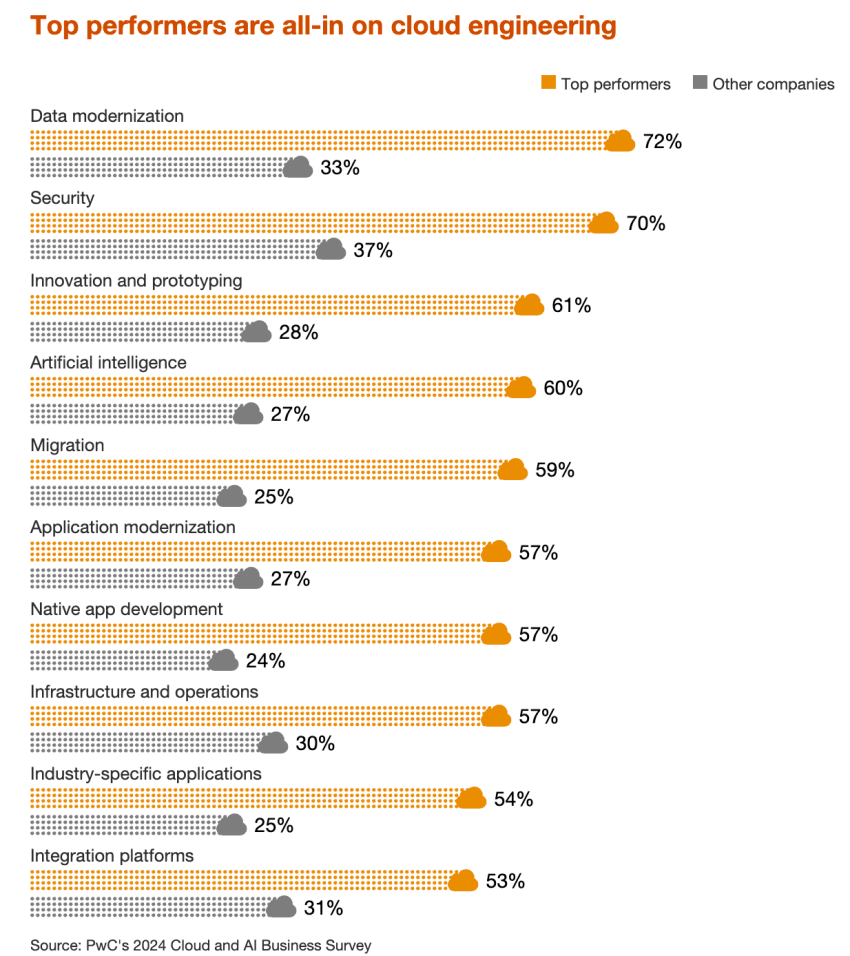
Information analytics and expert system: cloud centers provide huge computing and storage capability to run data analytics for states and governments, machine knowing, and AI work that need specialized and massive hardware. This, for example, is one reason behind the race by data centers and AI to establish a presence in the Gulf and provide services there.
Future of Cloud Tools in the Middle East
This is the reasoning behind creating schedule zones within a region, or throughout numerous regions when laws enable. The kind of cloud service utilize depends on each nation's policy and its information classification, but the most typical patterns in the public sector consist of: personal data, documents, residency records. taxes, customs, and federal government procurement.
Fragility in the face of non-cloud bottlenecks: Even if data centers are not bombed, submarine cables and globalconnectivity can cause severe congestion/degradation in cloud services. The cloud services industry represents a big worldwide market, and costs on it is gradually increasing year after year with the advancement and expansion of artificial intelligence services., the research, consulting, and details innovation firm, anticipates IT costs in the Middle East and North Africa to reach 169 billion dollars in 2026, and states specifies" data center systems"are the fastest-growing industryMarket estimated at 12.984 billion dollars in 2026.

Latest Posts
The Future of Technological Innovation for Startups
New Venture Updates From GCC Startup Sector
Strategic Benefits of Cloud Integration in the GCC