All Categories
Featured
Table of Contents
An article by Alexander Rugaev, the Creator of AR Ventures. Synthetic intelligence has rapidly become the primary destination for global equity capital. Aggregated information from PitchBook, CB Insights, and other market trackers reveals that AI companies raised roughly $270 billion in 2025, representing majority of worldwide venture capital financial investment that year.
Much of the worldwide conversation around AI investment focuses on generative designs and the massive computing infrastructure needed to train them. Both are very important. The broader structural conditions that identify where AI can scale sustainably often get less attention. Energy availability, regulatory structures, and access to long-lasting capital increasingly shape the geography of AI advancement.
The region combines reasonably low energy expenses, coordinated state-backed investment automobiles, and a start-up ecosystem that remains less saturated than major Western markets. Together, these aspects are beginning to form a various financial investment thesis for AI in the region. The fast growth of AI workloads is currently producing facilities difficulties worldwide.
While capital and hardware availability stay essential, energy supply and grid capability are becoming important restraints in lots of markets. In parts of the United States and Europe, increasing energy prices, grid restrictions, and regulatory approval timelines are starting to affect how quickly hyperscale information centres can be released. The Gulf area runs under various structural conditions.
Developing the Applied AI Roadmap for 2026
Qatar, for example, has actually been actively bring in hyperscale infrastructure investment, while Saudi Arabia has taken a more expansive technique. The kingdom's Humain effort, backed by the Public Financial investment Fund and partnered with companies including Nvidia, AMD, AWS, Qualcomm, and Cisco, targets 1.9 gigawatts of data center capacity by 2030, with longer-term ambitions of reaching 6 gigawatts by 2034.
Infrastructure investment in AI is not merely a question of capacity. Modern AI accelerators can draw close to one kilowatt of power at peak load, implying that the long-lasting economics of information centres depend heavily on sustained work and energy performance. For investors, this places increasing value on cooling innovations, energy optimisation, and the utilisation economics of inference workloads rather than simply headline capacity figures.
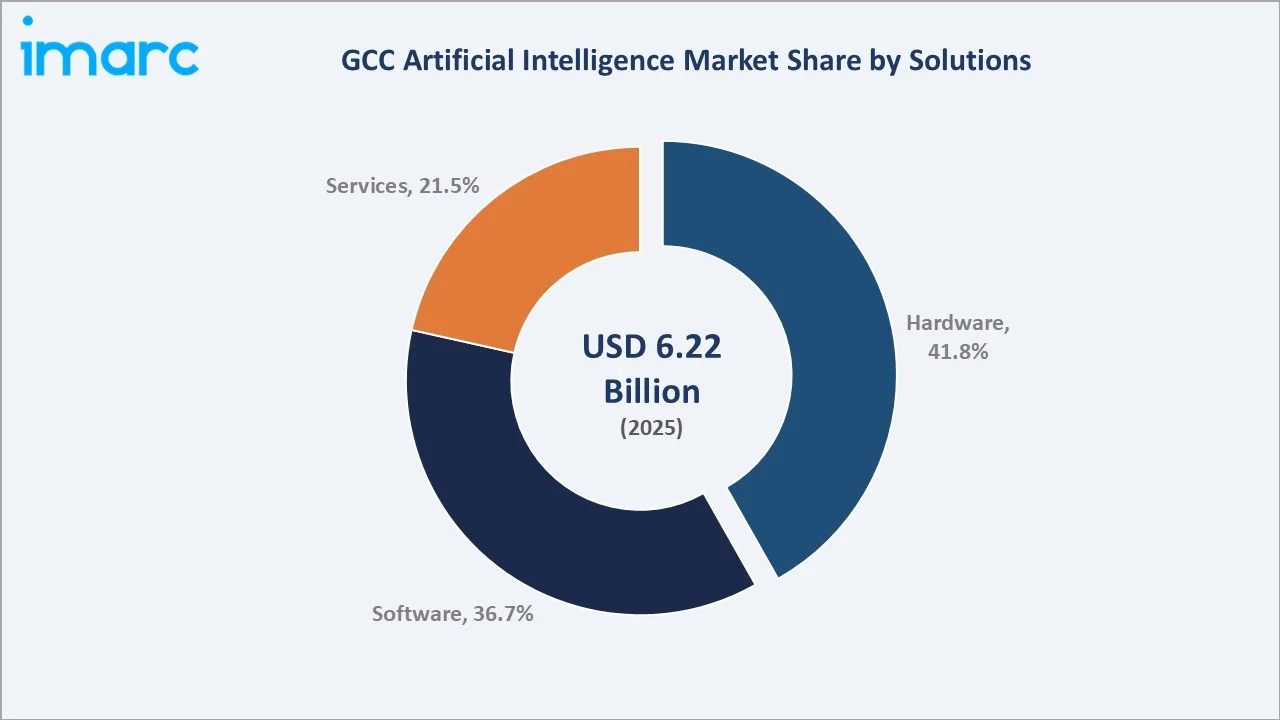
This is where the GCC might hold an advantage that is frequently overlooked in worldwide AI discussions., for example, prioritises the adoption of AI across several government departments and sectors.
AI-driven tools for credit evaluation, compliance tracking, and scams detection should operate within regulatory structures shaped by Islamic finance principles. Solutions developed for these environments need specialised knowledge of local regulatory and monetary systems that worldwide startups may discover hard to replicate quickly. Comparable opportunities exist in other sectors. AI tools that transform clinicians' voice recordings into Arabic-language medical paperwork, or systems created to automate regulatory compliance for GCC-specific structures, solve highly practical operational issues.
From an investment viewpoint, start-ups running in these specialised segments typically face less competitors than comparable companies in the United States or Europe. A lot of the innovations established for Arabic-language environments or region-specific regulatory systems may likewise discover demand in underserved markets across Africa and parts of Central Asia, where similar linguistic and regulative conditions exist.
Reviewing the Best Cloud Software for 2026
Initially, infrastructure investments ought to be assessed not just by revealed data centre capability however likewise by energy effectiveness, utilisation rates, and long-term workload sustainability. Second, some of the most durable AI organizations may emerge from companies embedded in functional workflows rather than consumer-facing applications. Business software that silently automates compliance, documentation, logistics optimisation, or monetary analysis frequently generates steady, repeating earnings since organisations depend on it for day-to-day operations.
As language models, speech recognition systems, and business AI tools end up being more tailored to Arabic-speaking markets, the companies developing these capabilities might ultimately serve a much larger location where similar linguistic barriers exist. As regional data centre infrastructure expands and business adoption of AI relocations from pilot jobs to large-scale procurement, the Gulf's position in the worldwide AI environment may begin to develop.
The structural conditions that enable this shift are currently emerging: access to energy resources, collaborated capital implementation through sovereign funds, and a regulative environment where federal governments are actively encouraging AI adoption. The question for investors is less whether these conditions exist and more how quickly capital and founders relocate to build within them before the chance ends up being commonly acknowledged.
The Evolution of Technological Growth for Startups
Artificial intelligence has rapidly end up being the main destination for international endeavor capital., accounting for more than half of worldwide venture capital financial investment that year.

Latest Posts
The Future of Technological Innovation for Startups
New Venture Updates From GCC Startup Sector
Strategic Benefits of Cloud Integration in the GCC